
Why is my AC running but not cooling?
An AC that runs without cooling usually has one of a short list of problems: wrong thermostat settings, restricted airflow, a power problem at the outdoor unit, or a refrigerant or electrical fault that needs a technician. You can check the first three yourself in about ten minutes. The last group needs tools, a license and someone who has made peace with hot attics.
Our rule is boring first. The dull, cheap causes are the common ones, and checking them costs you a walk around the house. (We would love to tell you HVAC is all high drama. It is mostly filters.)
In Sacramento, timing matters. On a 104°F afternoon, a system that is a little short on airflow can fall behind fast, and the house keeps warming until the evening breeze shows up. Do these checks early in the day if you can, before the heat peaks.
Is the thermostat set correctly?
Start at the wall. The thermostat should be set to Cool, with the setpoint a few degrees below the current room temperature. If the fan is set to On instead of Auto, the blower runs nonstop and can push warm air between cooling cycles, which feels a lot like a broken AC.
Then check the power. Many thermostats run on batteries, and a blank or dim screen can stop the system from calling for cooling at all. Smart thermostats can also lose a schedule after an update or a Wi-Fi drop, then sit there looking pleased with themselves.
Every HVAC company has a story about a long drive to a house where the thermostat was set to Heat. We are not sharing ours. We did, however, check our own office thermostat twice while writing this paragraph.
- Mode set to Cool
- Setpoint below the current room temperature
- Fan set to Auto
- Screen on and batteries fresh
- No schedule or vacation hold overriding your setting
Can a dirty air filter stop an AC from cooling?
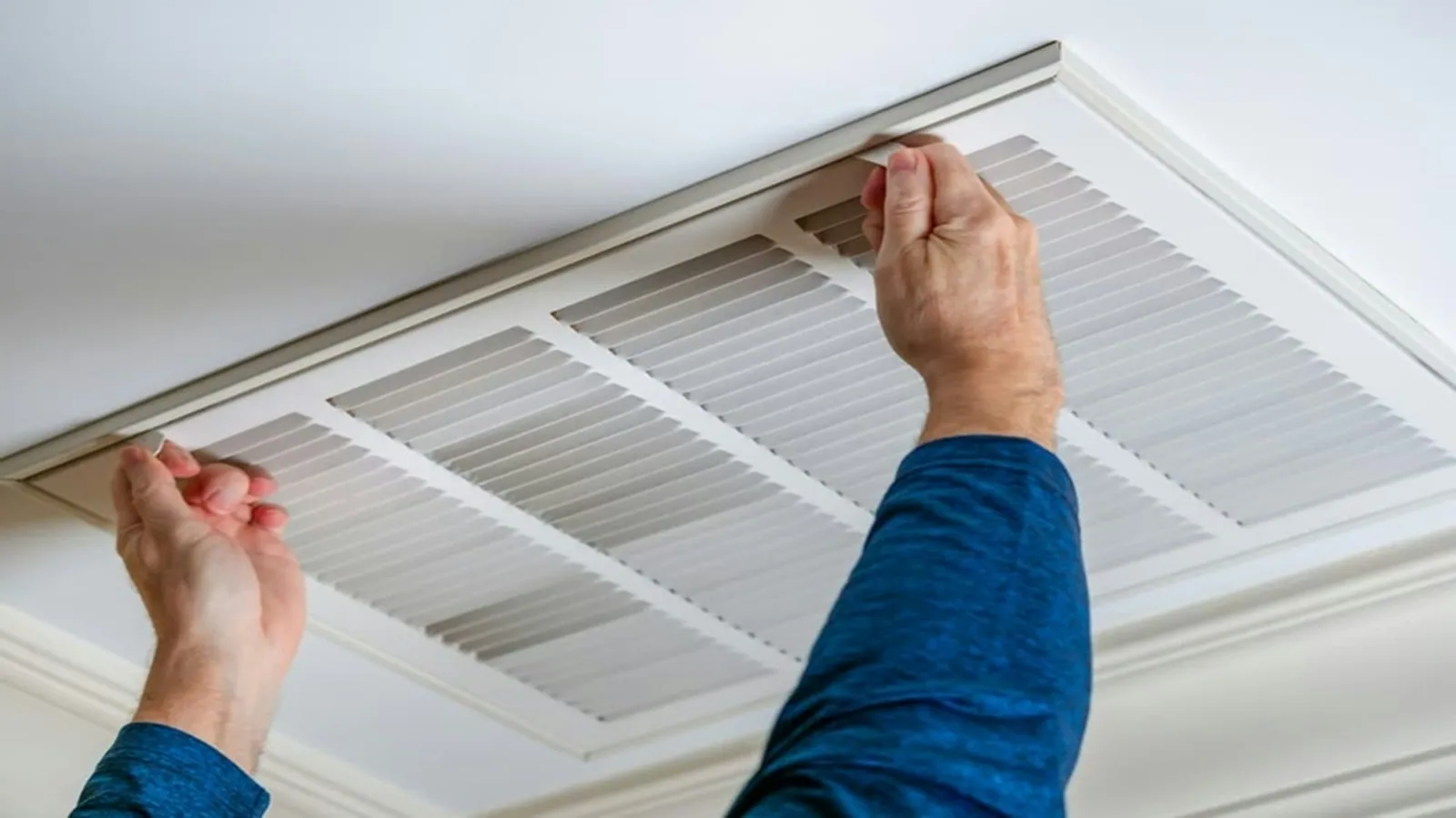
Yes. A clogged filter cuts the airflow across the indoor coil. Less air means less cooling at the vents, and in bad cases the coil gets so cold it freezes, which stops cooling almost entirely.
Pull the filter out and hold it up to a light. If you can't see light through it, replace it. Write down the size printed on the frame before you go to the store, because buying the wrong size and driving back is a rite of passage. We would not swear under oath that we have never done it ourselves.
If you find ice on the indoor coil or on the larger copper line at the outdoor unit, switch cooling off and let it thaw for a few hours; running the fan by itself can speed that up. A frozen coil usually points to an airflow or refrigerant problem, so if it freezes again after thawing, call for service.
Should I reset the breaker if my AC won't turn on?
Check the electrical panel for a tripped breaker labeled AC, condenser or furnace. The indoor unit usually has its own breaker or switch, and the outdoor unit has a disconnect box on the wall nearby.
You can reset a tripped breaker once. If it trips again, leave it off. Do not repeatedly reset a tripped breaker. A breaker that keeps tripping is protecting you from a fault, such as a failing capacitor, a shorted motor or a wiring problem, and forcing it back on can damage the compressor.
The breaker is the most honest part of the whole system. When it trips twice, take its word for it.
Turn the system off right away and call if you notice a burning smell, smoke, loud grinding or screeching, or water near electrical parts.
Is anything blocking the outdoor unit or the return vents?
The outdoor unit gets rid of the heat pulled out of your house. If it is boxed in by shrubs, a fence, stacked patio furniture or a season's worth of leaves, it can't shed that heat and cooling drops off. Keep a couple of feet clear around the sides and open space above. In most Sacramento yards the outdoor unit is doing the hardest job on the property while wedged behind the recycling bins, and frankly we would complain too.
Clearing debris from around the unit is as far as you need to go. You do not need to open panels, reach into the unit, or handle electrical or refrigerant components before calling.
Inside, find the return grilles, the larger vents that pull air back to the system. A couch pushed against one, or a closed bedroom door with no other path for air, can starve the system. Closing supply vents in unused rooms rarely saves energy the way people hope, and it can raise pressure in the ducts.
When should I stop checking and call an HVAC technician?
Call once the basic checks are done and the system still won't cool, or straight away if you see any of the warning signs below. Refrigerant and electrical repairs need a licensed technician. Refrigerant also shouldn't need topping up like windshield washer fluid; if it is low, there is a leak, and the leak needs finding.
When you call, say what you already checked and when the problem started, especially if it gets worse in the late afternoon. That saves time once a technician is at the door.
Boring first, as promised. You did the boring part, and now it is our turn. Capital City Comfort answers the phone 24/7 at (916) 390-0025 and gives a flat-rate price before any repair starts. Being open 24/7 does not guarantee a specific arrival time, and we will tell you what to expect when you call.
- Ice comes back after the coil thaws
- Water pools near the indoor unit
- The breaker trips again after one reset
- Burning smell, smoke or electrical buzzing
- The outdoor unit hums but its fan doesn't spin
- The system starts and stops every few minutes (short cycling)
Related services