
How do I know if I should repair or replace my AC?
Start with what is actually wrong. A single failed part on a system that cools evenly and hasn't needed much attention is usually a repair. A major failure, a history of breakdowns, or comfort problems that never went away is when replacement belongs on the table.
People want a formula for this. We would like a crystal ball. What we actually have is a flashlight, a set of gauges and a habit of looking before recommending anything, which is less magical and more accurate.
In Sacramento, timing is part of the decision. A repair in May buys you a summer to think. A failure during a July heat wave can force the choice in an afternoon. If your system is borderline, deciding before the first long stretch of hot weather gives you room to compare.
Does an older AC need to be replaced?
Not on age alone. Equipment age is useful background, but it is not a diagnosis. A well-maintained 15-year-old system can outlast a neglected 8-year-old one. Age tells you roughly how much life might be left and whether parts are still easy to find, but it can't tell you what failed.
Age does change the math on a big repair. Central AC lifespans are often quoted at 15 to 20 years, with heat, hours of use and maintenance moving that a lot, and a long Sacramento cooling season puts more hours on the equipment every year. Spending heavily on a system near the end of that range means the next failure may be a different part entirely.
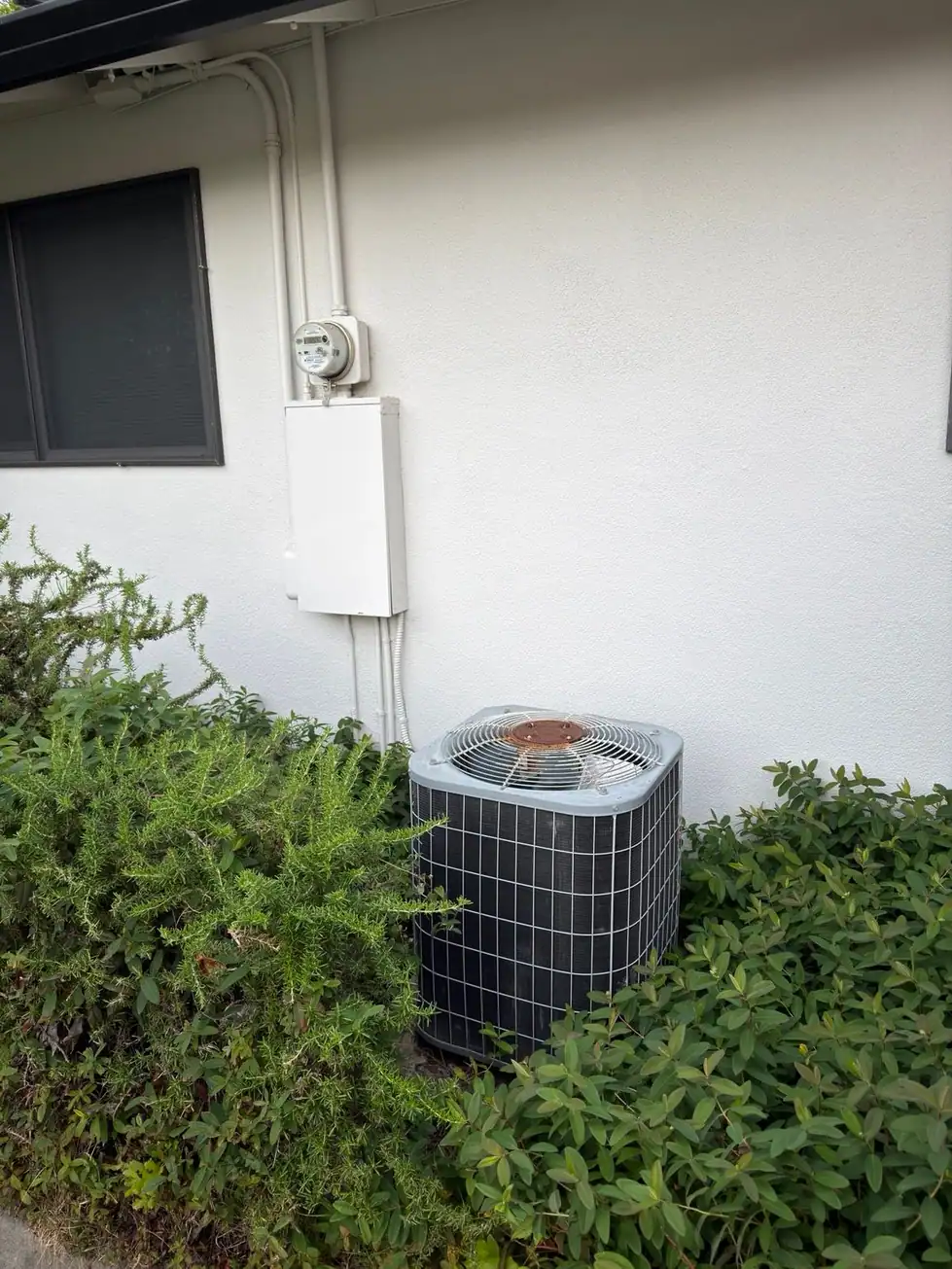
Ask most people how old their AC is and you get "it was here when we moved in." That's fine. The data plate on the outdoor unit usually shows the manufacture date. (In fairness, we couldn't tell you the age of our own water heater without going to look.)
How many AC repairs are too many?
A pattern matters more than any single bill. One capacitor in ten years is normal wear. A capacitor, then a fan motor, then a refrigerant leak over two summers is a system telling you something.
Keep your invoices. A list of what failed and when is more reliable than anyone's memory, ours included, and it shows whether repair costs are climbing. Frequent repairs, uneven cooling and rising energy use are the signs we look at first, and they often show up together.
This is where the flashlight earns its keep. A string of repeat failures sometimes traces back to one root cause, such as poor airflow cooking parts, that nobody fixed. Solve that and a system can stop eating components, which changes the repair-or-replace math.
What if my AC uses R-22 refrigerant?
Check the label on the outdoor unit. Many systems installed before about 2010 use R-22, which has not been produced or imported in the US since 2020. What's left is recycled or stockpiled, so recharging a leaking R-22 system is expensive and only buys time.
Most systems installed in the 2010s use R-410A, and that is being phased down as well. New residential systems made from 2025 on use lower-impact refrigerants such as R-454B and R-32. R-410A systems can still be serviced, so the refrigerant alone isn't a reason to replace a healthy unit.
Refrigerant names sound like droids from Star Wars. Sadly, R-454B does not beep. Outdated refrigerant plus a major failure is a strong case for replacement; outdated refrigerant on a system that runs well is a reason to start planning.
Is my AC the right size for my house?
Bigger is not automatically better. Equipment capacity should reflect the cooling load. An oversized AC cools the air fast, shuts off before it has pulled out much humidity or reached the far rooms, then starts again. That short cycling wears parts and leaves hot spots.
Sizing should come from a load calculation that looks at the house: square footage, insulation, windows and which way they face, duct condition and how many people live there. A proposal that simply matches the old unit's size assumes the old unit was right. In a Sacramento home that has been re-roofed, insulated or added onto since, it may not be.
If a room has always been hot, replacement is a good time to fix it, and the fix is often in the ducts. Our rule: if the only plan for a hot bedroom is "more tons," ask again. It's the HVAC version of turning the radio up to drown out a noise in the engine.
How do I compare AC replacement quotes?
Line by line. A low equipment price is not the same as a complete installed project. Each proposal should name the indoor and outdoor equipment, the cooling capacity, the controls, and which existing parts stay, such as the ducts, line set or furnace.
Ask about a gas-to-electric option at the same time. If your furnace and AC are both getting older, one electric heat pump may be able to take over both jobs. SMUD customers may qualify for a $3,000, $2,000 or $1,000 rebate depending on the upgrade, with eligibility rules and a participating SMUD Contractor Network installer required. Roseville Electric customers should check their own utility's programs.
The crystal ball is still on back order, but the flashlight is charged. Capital City Comfort gives a flat-rate price before work is approved, with no hourly fee. For a repair price and a replacement proposal side by side, call (916) 390-0025.
- Indoor and outdoor equipment, with model numbers
- Cooling capacity and SEER2 efficiency rating
- Thermostat and controls
- Which existing parts stay: ducts, line set, furnace
- Permits, inspection and removal of the old system
- Any duct repairs or changes
- Warranty terms in writing
Related services